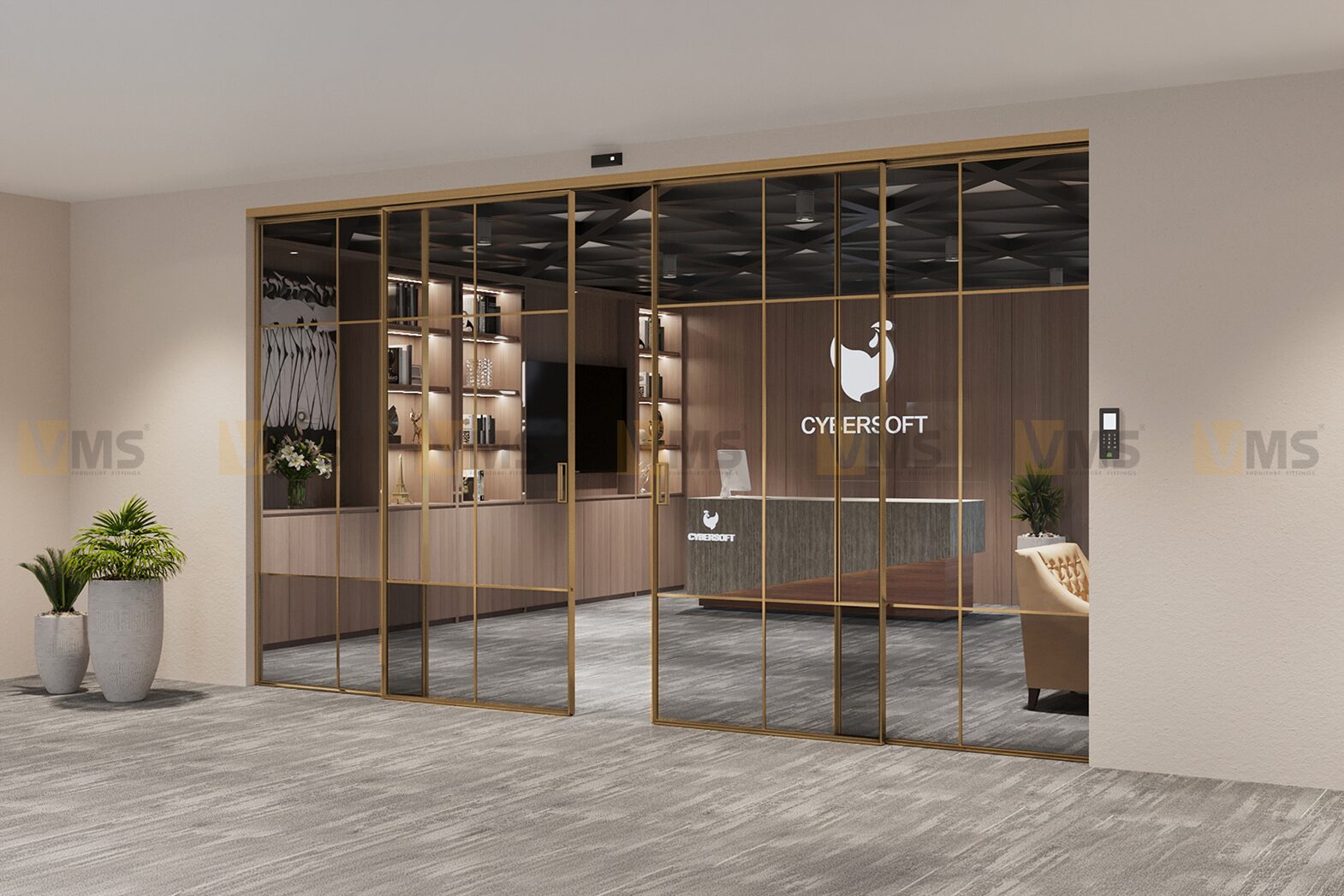

Modern interiors require more than static solutions; they require accessibility that matches the speed and intelligence of modern life. Electric synchronised sliding doors have evolved as a distinguishing element of high-end homes and forward-thinking businesses, revolutionizing how we experience space transitions. Unlike traditional sliding doors, which required physical effort, synchronised sliding doors work wit flawless precision, allowing for effortless passage while improving aesthetics and functionality.
The transition to automatic sliding door systems represents a larger shift in how we build and live out spaces. Whether it’s a smooth entry into a living area or easy access in a buy commercial corridor, these solutions combine convenience, design quality and intelligents engineering.
Why Sliding Door Technology Is Evolving
Over the last decade, the way people live and work has shifted dramatically open plan layouts, flexible work arrangements and luxury living spaces require solutions that are intuitive rather than mechanical. The demand for smarter, more convenient movement solutions has never been higher.
Where manual sliding doors formerly held supreme, homeowners and facility managers today demand systems that function with minimal friction; literally and metaphorically.
The change from manual to an electric system is more than just automation; it’s about designing places that respond intelligently to how people move through them.
Modern families like entrances that are pleasant and intuitive. Offices require high-traffic corridors that maintain movement while minimizing congestion and noise. Retail and hospitality venues demand regulated access that strikes a balance between openness and security. Automated sliding door systems meet all of these requirements, minimizing tiny friction points that develop over the day.
What Are Electric Synchronised Sliding Doors
Synchronised sliding doors are fundamentally motorised systems with two or more door panels moving in unison. Instead of opening separately, the panels create a smooth, cohesive aperture by gliding outward or inward in perfect synchronization.
This is how coordinated movement functions: Each panel’s force, timing and speed are managed by a central control system, which guarantees that they all move as a single unit. Usually, motion sensors detect approach and initiate the opening sequence. The panels react at the same time, producing a graceful, nearly fluent movement that resembles a gesture.
The difference between standard sliding doors and synchronised systems lies in precision and coordination. A basic sliding door operates with simple mechanics: push one panel, and it slides aside. An automated sliding door system, by contrast, uses smart controllers, sensors, and synchronized motors to deliver controlled, predictable movement. Synchronised systems go further, ensuring perfect alignment and balanced motion even across wider openings.
Synchronised sliding doors give a sense of elegance in high-end applications, such as large living rooms with floor-to-ceiling glass or business lobbies that need grandeur. The doors execute a synchronised act that improves the whole experience of entering a location; they do more than merely open.
Why Homes Are Adopting Electric Sliding Door Systems
The residential market has quietly transformed. Premium homes increasingly feature electric sliding doors as a marker of modern living. This shift isn’t driven by trend alone; it’s rooted in practical benefits that genuinely improve daily life.
Convenience and Hands-Free Operation
Automatic sliding doors for homes eliminate the small friction of manually operating an entry or interior passage door. After a long day carrying groceries, managing children, or handling work equipment, a door that opens without contact feels like genuine luxury.
Hands-free operation is particularly valuable for parents managing young children, individuals with mobility considerations, or anyone carrying multiple items. The convenience compounds: a small ease at one threshold multiplies across a day, a week, a year of passages through doors.
The psychological benefit is equally important. Automatic doors signal that a home is thoughtfully designed, responsive, and in touch with contemporary living standards. Visitors notice and remember these touches.
Enhancing Everyday Comfort and Accessibility
Electric sliding doors residential systems bring true accessibility into the home environment. Beyond code compliance, they create spaces where family members of all ages and abilities move with equal ease.
For aging in place, accessible homes with automatic door systems mean independence is preserved. For children learning to navigate spaces, the seamless passage removes obstacles. For guests with various mobility profiles, the home feels inclusive and considered.
The comfort extends beyond the physical. There’s a psychological dimension to moving through a space that anticipates your needs; the door is ready for you, not something you must wrestle with. This responsiveness creates a subtle but noticeable difference in how a home feels.
The Growing Use of Electric Sliding Doors in Offices
Office environments are where electric sliding doors for offices have seen explosive adoption. As workplace design evolves, these systems are no longer optional upgrades; they’re becoming baseline expectations in modern commercial interiors.
Improving Movement in High-Traffic Areas
Office corridors, break rooms, and conference areas experience constant movement. Electric sliding doors for offices reduce bottlenecks and congestion points where traditional doors create friction. A door that opens in response to approach rather than requiring manual operation means faster, smoother passage.
In high-traffic scenarios, this efficiency compounds. A busy office corridor with multiple electric doors functions with visible fluidity compared to spaces relying on manual passage. The difference appears small in isolation but becomes apparent across a day of accumulated passages.
Beyond efficiency, there’s a subtle impact on office culture. Spaces that feel easy to move through feel more open and accessible. Automated systems signal that the organization has invested in thoughtful design, a message that extends beyond that single threshold.
Supporting Flexible and Modern Workspaces
Contemporary office design emphasizes flexibility, spaces that adapt quickly to different configurations and uses. Synchronized sliding doors align perfectly with this philosophy. Large glass partitions with synchronized sliding door systems can divide open areas or create collaborative zones, then seamlessly reconfigure.
Meeting rooms, huddle spaces, and collaborative areas benefit from doors that don’t demand cognitive load. Workers can focus on tasks rather than mechanics. The doors simply respond when needed, disappearing from conscious attention.
This is the essence of intelligent design: systems that serve the space without demanding attention. Automated sliding door systems exemplify this principle.
Design Benefits of Synchronised Sliding Door Systems
Aesthetically, synchronized sliding doors deliver what traditional sliding systems struggle to achieve: clean, modern interiors without visual clutter.
Manual sliding doors require substantial frame structure and visible hardware to operate reliably. Synchronized systems can be more refined. Frames can be slimmer, hardware more subtle, overall appearance more contemporary. The engineering sophistication is hidden behind visual elegance.
Seamless large openings become possible with synchronized designs. A living room can open fully to an outdoor terrace, or a conference suite can expand into a single large space, all without the visual interruption of multiple door tracks or bulky mechanisms. The glass becomes the design statement, not the hardware.
Space optimisation happens naturally. Without requiring the clearance for traditional sliding mechanisms, rooms feel more generous. The architectural vision of the designer isn’t compromised by mechanical constraints. Synchronized systems effectively disappear, leaving only the aesthetic result.
Performance and Reliability in Automated Systems
The engineering advantages of electric systems extend beyond convenience. Smooth and balanced movement is a primary benefit. Because motors distribute force evenly across synchronized panels, stress concentrates nowhere. The movement feels effortless because the mechanics are genuinely well-distributed.
Consistent performance over time is remarkable. While manual sliding doors degrade, tracks accumulate debris, friction increases, operation becomes stiffer, automated systems with proper maintenance maintain their initial responsiveness indefinitely. Annual servicing keeps them operating as they did on day one.
Reduced wear compared to manual systems is measurable. Because electric motors control movement speed and force, the doors aren’t subjected to the variability of human operation, sometimes gentle, sometimes forceful, sometimes careless. This consistency means seals last longer, tracks wear less, and the overall system maintains its integrity far longer than manual alternatives.
Where Electric Synchronised Sliding Doors Work Best
Certain applications showcase these systems at their finest.
Living rooms and open-plan homes benefit enormously. Large glass doors between interior living spaces and outdoor terraces, or between living and dining areas, create visual continuity while maintaining flexibility. Synchronized systems handle these expansive openings with grace.
Meeting rooms and collaborative spaces in offices gain enormous value. The ability to quickly transition a space from private to semi-open to fully integrated with adjacent areas creates flexibility that rigid walls cannot match.
Commercial interiors requiring controlled access represent another primary application. Luxury hotels, corporate reception areas, and high-end retail environments use synchronized systems to balance aesthetic refinement with functional control.
Why Synchronised Sliding Doors Represent the Future of Interiors
Several converging trends explain why these systems are becoming standard in forward-looking design.
Alignment with smart living and working trends is fundamental. As homes and offices incorporate more intelligent systems, lighting that responds to presence, climate control that learns preferences, security that operates seamlessly—doors that match this intelligence feel inevitable. Why manually operate a door when the space can intelligently respond?
Long-term efficiency and user comfort create tangible benefits. The small ease multiplied across years of use represents genuine improvement to daily experience. Forward-thinking homeowners and facility managers recognize this and invest accordingly.
The shift toward intelligent interior solutions reflects deeper changes in how we relate to the spaces we inhabit. We increasingly expect our environments to be responsive, intuitive, and refined. Synchronized sliding doors embody these expectations.
Designing Smarter Spaces with Electric Sliding Door Technology
For architects and designers, the lesson is clear: thoughtful planning beats afterthought installation. Decisions about door placement, automation systems, and integration with overall design should happen early, during the conceptual phases.
Choosing the right system early in the design process ensures that the door strategy aligns with architectural vision rather than working against it. Automated sliding door systems offer choices, different motors, control interfaces, and aesthetic profiles, but these decisions matter most when integrated into overall design direction.
The goal is interiors that feel intelligent without announcing their intelligence. The best-designed spaces handle practical concerns- passage, access, flexibility- so seamlessly that occupants simply experience ease. This is the promise of synchronized sliding doors: a technology that enhances without intruding, that serves function while advancing aesthetics.
FAQs
1. What’s the difference between automatic and synchronized sliding doors?
Automatic doors respond to sensors and open when someone approaches; a single door can be fully automatic. Synchronized doors coordinate multiple panels to move together as a unified system, creating larger openings with balanced movement.
2. How do synchronized sliding doors perform in residential settings?
They excel in premium homes, particularly where large glass openings transition between interior and exterior spaces, or where open-plan designs benefit from flexible divisions between areas. They require proper power supply and maintenance but deliver years of reliable, quiet operation.
3. What maintenance do electric sliding door systems require?
Annual professional servicing is recommended. This typically involves checking motors, sensors, alignment, and seals. Properly maintained systems operate reliably for 10-15+ years.
4.Are synchronized sliding doors suitable for commercial offices?
Yes, increasingly so. They’re especially valuable in modern office designs emphasizing flexibility, high-traffic corridors, and professional aesthetics.
5. How do I integrate synchronized doors into existing spaces?
Retrofit is possible but works best when planned carefully with professionals who understand both structural requirements and electrical integration.
Conclusion
Electric synchronised sliding doors are more than just an update; they embody a design philosophy that prioritises simplicity, intelligence and elegance. Whether increasing a home living area or transforming office functionality, these solutions provide practical benefits while improving overall interior quality.
The transformation from manual to intelligent, synchronised movement reflects a larger shift in how we construct and inhabit our environments. As homes and workplaces become smarter, expecting doors to match that intelligence is not a luxury; it is simply excellent design. The future of interior design is one in which systems adapt instinctively to human needs, generating surroundings that seem seamless, welcoming and intelligently planned. Synchronised sliding doors are fundamental to this vision.