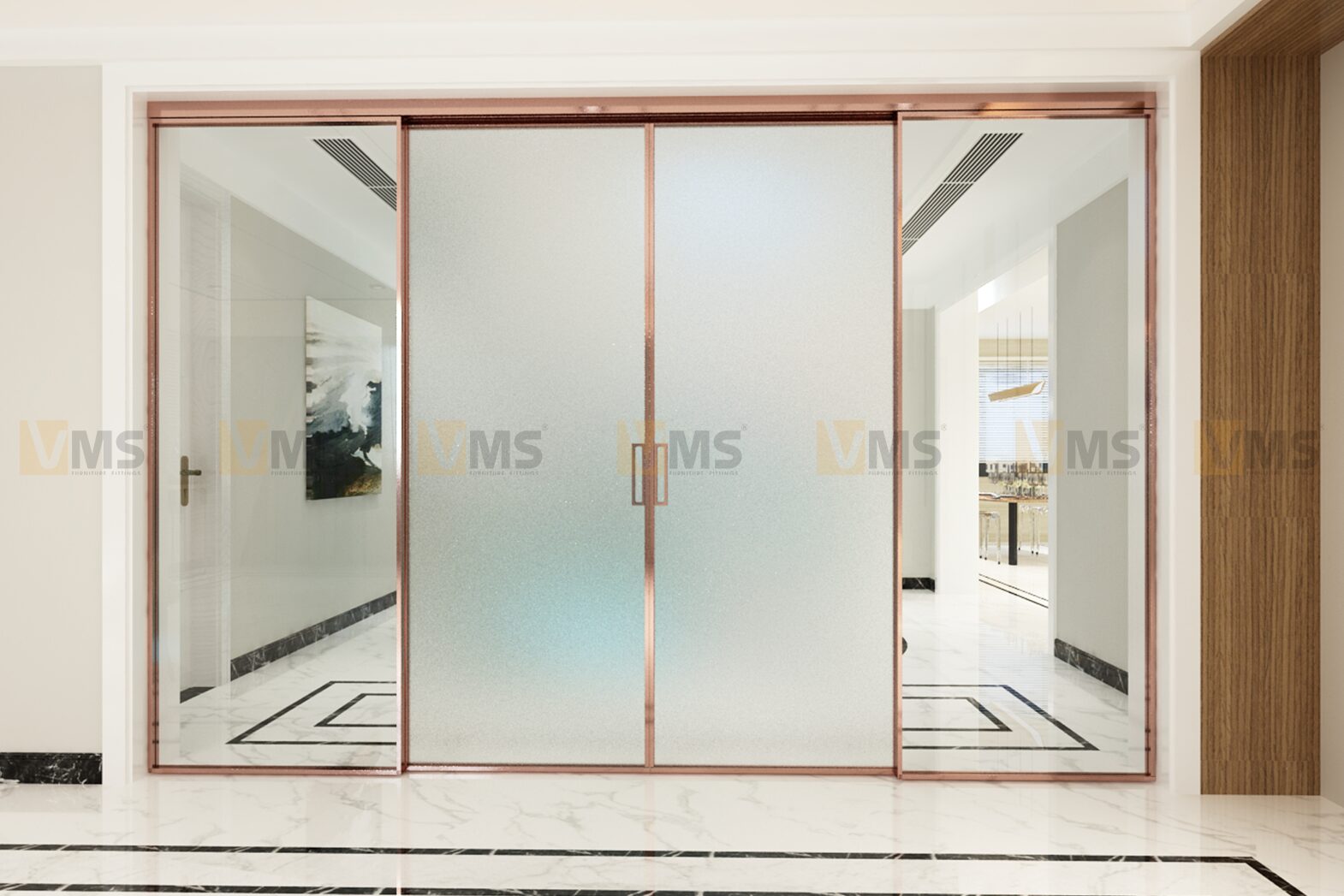

Remember when offices meant endless rows of cubicles? Isolated desks behind gray fabric walls where creativity went to die? Those days are fading fast. Today’s most innovative companies are tearing down those barriers, literally and figuratively and building workspaces that actually feel like places where people want to work.
That’s where glass partition walls come in.
The Problem With Traditional Office Partitions
Before we talk about solutions, let’s be honest about the problem. When you’re designing an office in 2026, you’re facing a genuine dilemma. You need privacy for focused work. You also need openness and collaboration. You want your team connected, but not constantly interrupted. You want to optimize space without making people feel crammed into boxes.
Traditional solutions fail on multiple fronts. Solid walls create isolated silos where teams feel disconnected. Cubicles with fabric panels feel dated and depressing; they scream “cookie-cutter corporate,” not “modern innovative workplace.” Open-plan offices sound great until you realize nobody can concentrate with constant background noise.
Glass partition walls solve this paradox. They’re the design equivalent of having your cake and eating it too.
What Makes Glass Partition Walls Different?
Here’s what architects and office designers quickly discover: glass partition walls don’t just divide space; they transform how people experience the entire office. When you walk into a space with smart glass partitions, something feels different immediately. The light flows. The space feels bigger. You can see movement and activity without feeling crowded or exposed.
The magic happens because glass walls maintain visual connection while providing acoustic and functional separation. Your team can see each other. Collaboration happens naturally. But when someone closes the glass door for a focused work session, they get real privacy. It’s the best of both worlds.
The aluminum frame structure matters too. Quality aluminum frames aren’t just functional; they define the aesthetic. Sleek frames communicate sophistication. They’re lightweight enough that installation is straightforward, yet strong enough to support standard glass panels reliably for years.
Creating Spaces Where Teams Actually Thrive
Think about how modern teams work. They’re not static anymore. A marketing team might need a collaborative space for brainstorms on Monday, then individual focus areas on Tuesday for execution. A tech team might alternate between pair-programming sessions and independent development work. Corporate managers need spaces that adapt to how their business actually operates, not how it operated five years ago.
Flexible workspace design using glass partition walls makes this fluidity possible. You’re not committing to a fixed layout. As your business evolves, your office evolves with it. Need to reconfigure teams? Sliding partition systems make it easy. Want to combine two meeting spaces into one larger room? Glass partition walls give you that option without renovation headaches.
This adaptability is worth its weight in gold for growing businesses. You’re not stuck with architectural decisions made by someone who doesn’t understand your actual workflow.
The Employee Experience Angle
Here’s something that often gets overlooked in office design discussions: how your space actually affects how people feel about coming to work.
Employees in naturally-lit, visually-open spaces report higher engagement. They feel part of something larger than themselves. When you can see your colleagues collaborating, you feel connected even when you’re focused on individual work. Collaborative spaces with glass walls create environments where people naturally want to be present, not just physically, but mentally.
Compare that to traditional partitioned offices where people sit in isolated pods. The psychological difference is dramatic. One feels energizing. The other feels draining.
The acoustic benefits matter too. Quality glass partitions reduce noise transfer, meaning focused workers actually get the quiet they need while remaining part of the office ecosystem. It’s the difference between “I can’t concentrate here” and “I can get real work done and still feel connected.”
Design Meets Functionality: The Aluminum Frame Advantage
Glass partition walls work because of intelligent engineering. The aluminum frames are precision-designed to balance multiple requirements simultaneously. They need to support glass panels safely. They need to integrate hinges smoothly. They need to accommodate doors that open quietly and close securely. They need to look clean and contemporary.
Quality aluminum partition frames from specialized manufacturers handle all this seamlessly. The frames appear minimal; they don’t distract from the open feeling, yet they’re engineered to perform flawlessly across thousands of open-close cycles.
For architects specifying these systems, the customization is genuinely valuable. Frame finishes can be anodized, powder-coated, brushed, or polished to match your overall design language. Glass options range from clear to frosted to patterned. Door configurations adapt to your specific layout requirements.
Why Forward-Thinking Companies Choose Glass Partitions
Collaborative spaces with glass partitions appear in offices everywhere from tech startups to Fortune 500 headquarters. The trend isn’t slowing down; it’s accelerating. Why? Because once companies experience how well these systems work, they ask: “Why would we ever design an office any other way?”
The ROI is tangible. Space utilization improves. Employee satisfaction increases. The office literally feels more valuable because you’ve optimized every square foot for actual human work patterns, not abstract office theory.
How to Implement Glass Partitions Effectively
Start by mapping how your teams actually work. Where do they collaborate? Where do they need focus? What conversations are currently being held in hallways because there’s nowhere appropriate?
Glass partition walls designed thoughtfully answer these real-world questions. Pair them with proper acoustic glass and sealing for true privacy when needed. Use flexible workspace design principles to avoid overcommitting to fixed layouts.
VMS Plus specializes in custom glass partition systems engineered for Indian commercial environments. Our aluminum framing solutions provide precision engineering with design flexibility. We’ve worked with architects across corporate, startup, and institutional settings to create office spaces that actually work.
Quick FAQ
1. How much privacy do glass partitions provide?
With proper acoustic glass and sealing, you get genuine privacy for confidential conversations while maintaining visual openness.
2. Can glass partitions be customized to match interior design?
Absolutely. Frame finishes, glass types, door styles- everything adapts to your design vision.
3. Are glass partitions expensive compared to traditional walls?
Installation is often faster and less disruptive than building permanent walls, which can offset higher material costs.
4. Do they work in noisy office environments?
Yes. Acoustic glass specifically reduces noise transfer while maintaining the benefits of visual openness.
The Bottom Line
Glass partition walls aren’t just a design trend. They’re a fundamental shift in how we think about office space. They respect that modern work is both collaborative and focused. They create environments where people feel connected to their teams and capable of deep work.
For architects and office designers, they’re the answer to the question: “How do we build spaces where people actually want to work?”
Contact VMS Plus to explore custom glass partition systems designed for your specific office environment and design vision.